



Video Training → Kate Gregory - C++ Fundamentals Including C++ 17
Published by: voska89 on 6-08-2022, 04:37 |  0
0
Kate Gregory | Duration: 5h 47 m | Video: H264 1280x720 | Audio: AAC 44,1 kHz 2ch | 895 MB | Language: English
If C++ scares you, or you've heard that it's a difficult language, this course will show you how easy Modern C++ can be. It's a powerful language that works on a huge variety of platforms and has useful features that other languages don't have.
C++ is a general purpose programming language that is used by millions of developers. It has a reputation for being hard to learn and use, but with the changes in the language over the last few decades, this reputation is no longer deserved. C++ offers a powerful combination of performance and abstraction that other languages don't have.
In this course, C++ Fundamentals Including C++ 17, you'll learn how to write simple console applications and be ready to move on to writing platform-specific code.
Video Training → Kate Gregory - C++ 17 Beyond the Basics
Published by: voska89 on 6-08-2022, 04:37 | 0
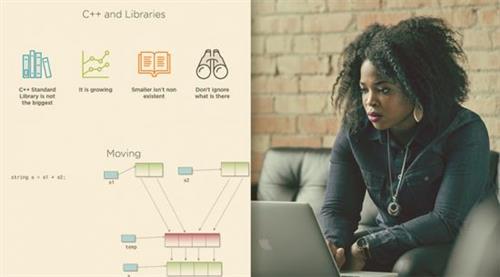
Kate Gregory | Duration: 2h 51 m | Video: H264 1280x720 | Audio: AAC 48 kHz 2ch | 460 MB | Language: English
You know C++ syntax, but do you know what makes code "modern"? How much do you use the Standard Library in your applications? Have you been keeping up with what was added in C++ 11, 14, and 17? Bring your C++ skills to the next level.
Do you want to take your C++ skills from basic syntax to the next level, including libraries and modern C++? In this course, C++ 17: Beyond the Basics, you'll learn what modern C++ is, and why it's to your advantage to write that way. First, you'll learn about the Standard Library collection classes, and some of the functions in the algorithm header that will save you time and effort while making your code easier for others to understand. Next, you'll discover lambdas and how to use them, and how to take advantage of move semantics for a tremendous performance enhancement. Finally, you'll see what exceptions are, when to use them and when not to use them, and how they work. By the end of this course, you'll have built a fundamental knowledge of C++ syntax, fill in the gaps most C++ developers have, and become one of those developers who uses the whole language to get the most performance while still writing code that's easy to maintain and read.
Homepage
Video Training → Kate Gregory - Beautiful C++ 17 Updating Legacy Code
Published by: voska89 on 6-08-2022, 04:36 | 0
Kate Gregory | Duration: 5h 01 m | Video: H264 1280x720 | Audio: AAC 44,1 kHz 2ch | 603 MB | Language: English
If you maintain an old large codebase, there's a good chance you don't understand parts of it. This course will show you how to update code to a more readable, understandable, and maintainable state by taking full advantage of modern C++ techniques.
C++ has been a popular programming language for decades, which means there's some really old code out there. Some of it is very hard to read and maintain. Capabilities have been added to the language and standard library that could simplify this code, and possibly make it faster or eliminate nagging intermittent bugs. In this course, Beautiful C++: Updating Legacy Code, you'll learn how to approach a large and unfamiliar codebase and make changes to modernize code. First, you'll learn some strategies for deciding exactly what to change. Then, you'll be introduced to language features and library capabilities that may not have existed when your code was first written, and can make it better now. Finally, you'll discover how to evaluate your progress and spread your gains through the rest of the code. By the end of this course, you'll be prepared for your code to last another generation or two and take full advantage of what modern C++ has to offer.
Homepage
Video Training → Kate Gregory - Learn to Program with C++ 17
Published by: voska89 on 6-08-2022, 04:34 | 0
Kate Gregory | Duration: 5h 19 m | Video: H264 1280x720 | Audio: AAC 48 kHz 2ch | 705 MB | Language: English
If you've never programmed before, and you think you'd like to learn C++, why not learn it first? This course covers what you need to start writing real applications in C++.
This course is aimed at those who have never programmed before. If you're interested in programming and have a reason for choosing C++ as a language to learn, this course is for you. Rather than learning programming concepts in a language you don't care about and then learning C++, you can do both at once.
In this course, Learn to Program with C++, you'll learn basic programming concepts along with C++ syntax.
Video Training → Kate Gregory - C++ 20 Fundamentals with Kate Gregory
Published by: voska89 on 4-08-2022, 19:38 | 0
Kate Gregory | Duration: 7h 31 m | Video: H264 1280x720 | Audio: AAC 48 kHz 2ch | 951 MB | Language: English
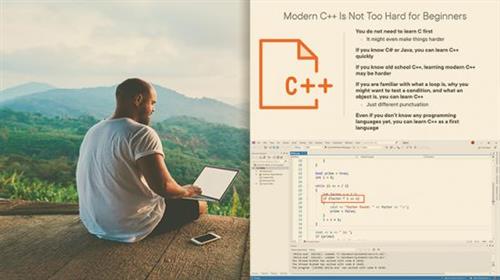
If C++ scares you, or you've heard that it's a difficult language, this course will show you how easy Modern C++ can be. You will learn the fundamentals of the language so that you can write useful C++ applications.
C++ is a powerful general purpose language that has grown and changed over decades, which can make it feel difficult to learn. In this course, C++20 Fundamentals, you'll learn to write simple modern C++ programs using the language and its standard library. First, you'll explore the basics of the language syntax. Next, you'll discover how to combine pieces into larger programs and save time with the standard library. Finally, you'll learn how to avoid common pitfalls that used to be problems for C++ developers in older versions of the language. When you're finished with this course, you'll have the skills and knowledge of C++ needed to write useful applications targeting your chosen platform and framework.
Homepage
Video Training → Magnum Photos – Gregory Halpern: Documentary Sur/Realism
Published by: voska89 on 7-06-2022, 07:15 | 0

Magnum Photos – Gregory Halpern: Documentary Sur/Realism
https://www.magnumphotos.com/learn/course/gregory-halpern-documentary-sur-realism/
Genre / Category: Photography
File Size :9.23GB
Gregory Halpern leads our latest on-demand class. Featuring a curriculum of 16 lessons, this class unpacks his approach to portraiture, the power of editing and sequencing in building photographic narratives, and shares insights into how his celebrated projects and photobooks – includingA, ZZYZXandOmaha Sketchbook– were created.
Follow Halpern as he creates new work in and around his native Buffalo, NY, focusing on his attempts to create compelling portraits of strangers met via Craigslist and encountered along the way. Halpern shares his end-to-end process, from pressing the shutter and creating contact sheets to his approach to editing and sequencing, giving his honest reflections on the successes and the failures.
Video Training → Kate Gregory - What's New in C++20
Published by: voska89 on 1-03-2022, 13:34 | 0
Duration: 2h 3m | Video: .MP4, 1280x720 30 fps | Audio: AAC, 48 kHz, 2ch | Size: 270 MB
Genre: eLearning | Language: English
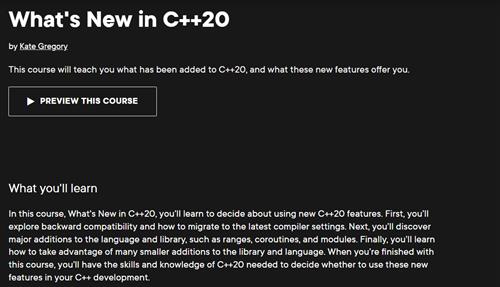
This course will teach you what has been added to C++20, and what these new features offer you.
Video Training → Kate Gregory - Advanced Debugging with Visual Studio 2019
Published by: voska89 on 1-03-2022, 13:34 | 0
Kate Gregory | Duration: 0h 38m | Video: H264 1280x720 | Audio: AAC 48 kHz 2ch | 104 MB | Language: English
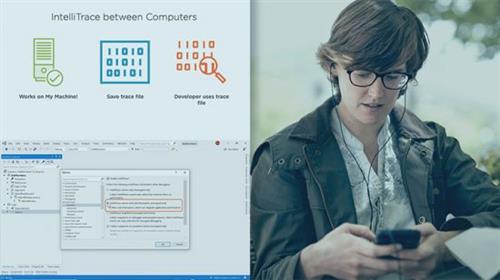
This course is for users of Visual Studio 2019 Enterprise Edition. It describes two powerful debugging tools available in only this edition: IntelliTrace and Code Map.
Have you ever been stepping through a program trying to reproduce a bug and looked right past it? Have you spent far too long trying to get an intermittent bug to happen? In this course, Advanced Debugging with Visual Studio 2019, you will learn about how IntelliTrace in Visual Studio 2019 Enterprise Edition enables Historical Debugging, which lets you go backward in a debugging session to examine the flow of control and the values of variables that caused a bad result, an exception to be thrown, or some other problem. First, you will discover how to use IntelliTrace for time travel debugging. Next, you will learn how to debug a bug that happened on another machine if a trace was collected. Finally, you will be given an introduction to Code Map, which lets you build a diagram of your system as you actually debug it. By the end of this course, you will understand the techniques on exploring relationships, spotting patterns that are not quite right, and explaining your code to others with Code Map.